Your Complete Skip Hire Guide 2026
UK skip hire typically costs £150-£450 (ex VAT) depending on size (4-12 yards), often with standard 10-14 day hire periods. You will need a council permit if placing the skip on a public road, but driveways and private property don't require one.

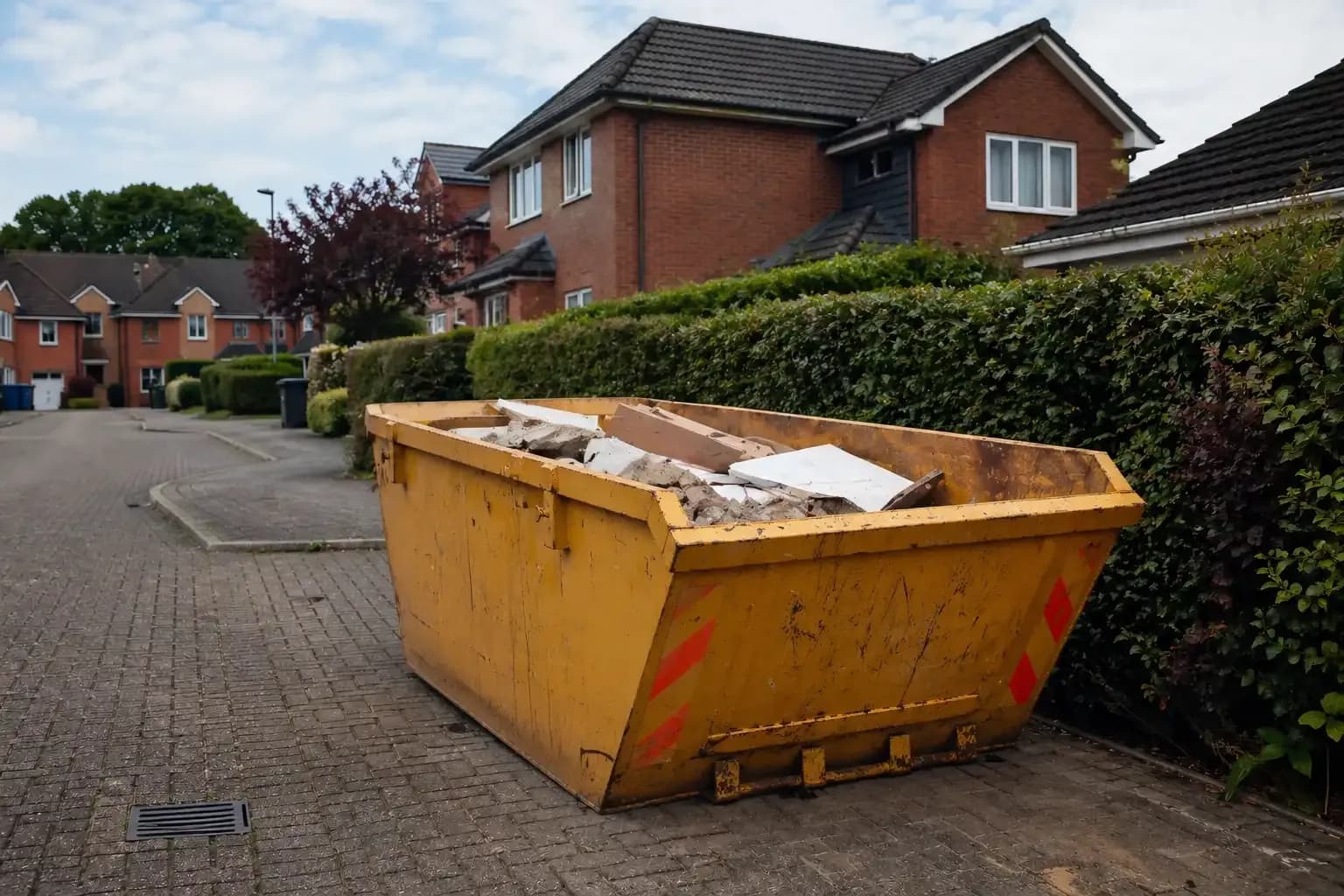
Skip hire provides the most efficient way to dispose of large amounts of waste in the UK. Whether you're renovating your home, clearing your garden, or managing a construction project, understanding skip sizes, costs, permits, and regulations ensures you choose the right service at the best price.
When Do You Need a Skip?
Skip hire is ideal when you're generating more waste than your regular bins can handle. You need a skip if you're renovating your home (kitchens, bathrooms, extensions), clearing your garden, decluttering or downsizing, working on construction projects, or managing commercial waste. A skip positioned on your property provides a safe, central disposal point that keeps your work area organised and compliant with waste regulations.
Common skip hire scenarios include:
- Home renovations: Kitchen and bathroom refits, extensions, whole-house renovations
- Garden projects: Landscaping, clearances, soil removal, decking replacement
- House clearances: Downsizing, probate clearances, decluttering projects
- Construction work: Builder's waste, demolition debris, packaging materials
- Commercial projects: Office refurbishments, retail fit-outs, warehouse clearances
Skip Sizes Explained
Choosing the right skip size saves you money and ensures you have sufficient capacity. UK skips are measured in cubic yards, with three main sizes suitable for most projects.
| Skip Size | Dimensions | Capacity | Best For | Typical Cost (ex VAT) |
|---|---|---|---|---|
| 4-5 Yard Midi Skip | 1.8m × 1.4m × 1.2m | 35-45 bin bags | Kitchen renovations, bathroom refits, small garden clearances, single-room projects | £150-£250 |
| 6-8 Yard Builder's Skip | 3.7m × 1.8m × 1.2m | 65-85 bin bags | Home extensions, major renovations, large garden projects, multi-room clearances | £200-£350 |
| 10-12 Yard Large Skip | 3.7m × 1.8m × 1.7m | 110-140 bin bags | Whole-house renovations, commercial clearances, major demolition projects | £280-£450 |
Midi skips (4-5 yards) are perfect for domestic projects. They fit comfortably on most driveways and handle single-room renovations, carpet removal from 2-3 rooms, garage clear-outs, and light construction waste. Learn more about midi skip hire.
Builder's skips (6-8 yards) are the industry workhorse. Designed for construction professionals but popular with homeowners, these skips often feature drop-down doors for easy wheelbarrow access. They're ideal for home extensions, loft conversions, full house renovations, and commercial shop fit-outs. See our full builder's skip and large skip guide.
Extra Large and Maxi skips (10-12 yards) suit major projects with substantial waste volumes. These require more space but provide maximum capacity for whole-house renovations, large commercial clearances, and major demolition work. Find out more about large skip and maxi skip hire.
Choosing the right size: Consider your project scope, available space, waste weight (heavy materials like soil and concrete need smaller skips due to weight limits), and budget. Hiring a skip that's too small and requiring a second delivery costs more than choosing the correct size initially. Read our full Skip Sizes Guide for detailed recommendations.
Not sure if it will fit?: Use our handy augmented reality tool to see how each size will fit on your driveway or on the road outside your house. Working on both Android and iOS, use your phone's native camera software to visualise how a skip will size up using approximate dimensions.
What Can Go in a Skip
Understanding what you can legally dispose of in a skip prevents additional charges, collection refusals, and environmental violations. UK law strictly regulates skip waste to protect the environment and public safety.
Acceptable Materials
| Category | Items You CAN Dispose Of |
|---|---|
| General Household | Furniture, carpets, curtains, bedding, books, toys, cardboard, packaging |
| Construction Waste | Bricks, concrete (reasonable quantities), tiles, wood, timber, kitchen units, bathroom fixtures (non-electrical), doors, skirting boards, metal (limited) |
| Garden Waste | Soil and turf (check weight limits), branches, hedge trimmings, decking, fencing, garden furniture (non-electrical), plant pots, paving slabs (check weight) |
Prohibited Items
You cannot put these items in a standard skip:
| Category | Prohibited Items |
|---|---|
| Hazardous Materials | Asbestos, paint, varnish, chemicals, solvents, oils, pesticides, fuel, gas bottles |
| Electrical Items (WEEE) | Fridges, freezers, TVs, monitors, computers, washing machines, dishwashers, microwaves |
| Other Restricted | Tyres, batteries, fluorescent tubes, light bulbs, medical waste, commercial food waste, full paint tins, plasterboard (unless specific permission given) |
Why are these prohibited? Hazardous materials contaminate soil and groundwater. Items like fridges contain refrigerant gases that damage the ozone layer. WEEE Regulations require electrical items to be processed separately to recover valuable materials and safely dispose of hazardous components.
What happens if you include prohibited items? You'll face additional collection charges (£50-£100+ per item), potential collection refusal until items are removed, environmental fines, and possible legal action for hazardous waste violations.
Alternative disposal: Use your local household waste recycling centre (HWRC) for electrical items, paint, and batteries. Many retailers offer take-back schemes when you purchase new appliances. Specialist companies handle asbestos, chemicals, and tyre disposal safely.
For comprehensive waste disposal guidance, read our What Can Go in a Skip Guide.
Need a skip?
Get an instant quote by entering your postcode.
Skip Hire Costs 2026
Skip hire costs vary based on size, location, hire period, and additional services. Understanding pricing structures helps you budget accurately and identify hidden charges.
Standard Pricing
Prices shown exclude VAT, delivery, 14-day hire period, collection, and waste disposal:
- 4-5 Yard Midi Skip: £150-£250
- 6-8 Yard Builder's Skip: £200-£350
- 10-12 Yard Large Skip: £280-£450
Regional variations: London and South East England typically cost 15-30% more than Northern England, Scotland, Wales, and Northern Ireland. Urban areas generally cost more than rural locations.
Additional Costs
| Cost Type | Amount | Details |
|---|---|---|
| Permit Costs | £20-£60/week | Required for skips on public roads, pavements, or council land. London: £40-£60, major cities: £30-£50, smaller councils: £20-£40 |
| Extended Hire | £5-£15/day | If you need the skip beyond the standard 14-day period |
| Prohibited Items | £50-£150/item | Removal and specialist disposal of items that shouldn't be in the skip |
| Same-Day Delivery | £20-£50 | Express delivery (subject to availability) |
| Overloaded Skip | Variable | Additional charges or collection refusal for skips filled beyond the maximum fill line |
How to Get the Best Price
Compare multiple providers: Prices can vary 20-30% for identical services. As a broker, The Skip Shop works with a network of providers to find you the best price, doing the hard work for you.
Book in advance: The Skip Shop's standard lead time is 72 hours. Last-minute bookings may attract premium charges.
Choose the right size: Avoid needing a second hire by selecting the correct size initially.
Avoid permits: Position skips on your driveway or private property to eliminate permit costs (£20-£60/week saving).
Plan your hire period: Complete your project within 14 days to avoid daily extension fees.
For detailed pricing breakdowns and money-saving strategies, read our full Skip Hire Costs Guide 2026.
Do You Need a Skip Permit?
Whether you need a permit depends entirely on where the skip will be positioned. Understanding permit requirements avoids fines, ensures legal compliance, and prevents delays.
You DON'T need a permit if the skip is positioned entirely on:
- Your private driveway
- Your front or back garden
- Your private land or property
- Private business premises (with owner permission)
- Private car parks (with owner consent)
You DO need a permit if the skip will be on:
- Public roads or highways
- Pavements or footpaths
- Council-owned land
- Grass verges
Even partial obstruction of public land (e.g., skip overhanging from your driveway onto the pavement) requires a permit.
Obtaining a Permit
| Option | Process | Cost | Timeline |
|---|---|---|---|
| Skip company arranges | They handle application, liaise with council, ensure compliance. The Skip Shop will handle this for you. | Admin fee £10-£30 + permit cost | Usually completed before delivery |
| Apply yourself | Contact council highways department (often online) | Permit cost only | 2-10 working days |
Permit Requirements
Councils typically need: your name and address, skip size and type, exact positioning location, delivery and collection dates, skip hire company details, and payment.
Permit display requirements:
- Permit number displayed on the skip
- Skip positioned exactly where specified on the permit
- Skip not obstructing traffic, access, or visibility
Penalties for Operating Without a Permit
Placing a skip on public land without a valid permit violates the Highways Act 1980. Consequences include fines up to £1,000, council removal of the skip at your expense, penalty charges for obstruction, and potential prosecution.
Special considerations: Even if the skip is on your driveway, blocking a dropped kerb (including your own) may require a permit, as dropped kerbs are legally part of the highway. Some councils restrict skip placement on narrow streets due to emergency vehicle access.
For complete permit guidance, read our Skip Permits Guide.
Need a skip?
Get an instant quote by entering your postcode.
How to Book a Skip
Booking a skip in the UK is straightforward with modern online systems. Here's the complete process:
Step 1: Determine Requirements
- Estimate waste volume to determine skip size
- Identify placement location (driveway, road, garden)
- Determine if you need a permit
- Plan delivery and collection timeline
Step 2: Get an Instant Quote
Enter your postcode for instant pricing including all fees. Our online system shows real-time availability and confirms your total cost upfront—no hidden charges.
Information needed: Postcode, desired skip size, preferred delivery date, and placement location.
Step 3: Book Your Skip
Online booking includes selecting size and date, entering delivery address and placement instructions, providing contact details, adding additional services, making secure payment, and receiving email confirmation.
Step 4: Prepare for Delivery
- Clear the designated area of vehicles and obstacles
- Ensure delivery vehicle access (approximately 3.5m width and 5m height clearance required)
- Consider protective boards under the skip to prevent driveway damage
- Inform neighbours if appropriate
Step 5: Fill Your Skip
- Fill evenly to maintain balance
- Don't exceed the maximum fill line
- Place heavier items at the bottom
- Break down large items to maximize space
- Keep prohibited items out entirely
- Cover the skip in wet weather to prevent waterlogging
- If required, secure and cover your skip to prevent unauthorised usage. Remember, prohibited items or overweight skips are liable to charges, even if you didn't place them in.
Step 6: Collection
Ensure the skip isn't overfilled, remove any prohibited items, clear the area around the skip for collection access, and ensure vehicles aren't blocking access if on a public road.
The skip provider will collect the skip from the date you have requested. Though in some cases, they may collect a few days after your requested collection date depending on their availability. You WILL NOT be charged additional rental if you specifally requested a collection date within the maximum hire timeframe.
For detailed booking guidance and tips, read our How to Book a Skip Guide.
Environmental Considerations
Modern skip hire is environmentally responsible, with reputable companies recycling 85-95% of skip contents. Understanding the recycling process helps you choose environmentally conscious providers.
The Recycling Process
Skip contents undergo manual sorting at licensed waste transfer stations. Materials are separated into categories: wood, metal, plastics, cardboard, concrete, soil, and general waste. Mechanical processing breaks down materials—concrete and bricks become crushed aggregate for road construction, wood becomes biomass energy or chipboard, metals go to recycling facilities. Sorted materials are sent to specialist recyclers, with non-recyclable combustible materials potentially sent to energy-from-waste facilities. Only materials that cannot be recycled (typically less than 10% for responsible operators) go to landfill.
Material Recycling Rates
| Material | Recycling Rate | Recycled Into |
|---|---|---|
| Wood | 95%+ | Biomass fuel, chipboard, fencing |
| Metal | 100% | New metal products (high value) |
| Concrete & Rubble | 95%+ | Crushed aggregate for construction |
| Cardboard & Paper | 90%+ | New paper products |
| Plastics | 60-70% | New plastic products |
| General Household Waste | 30-50% | Mixed materials harder to separate |
Your Environmental Responsibilities
Pre-sort materials when possible (separating metal, wood, and general waste increases recycling rates). Avoid prohibited items that disrupt recycling. Consider donating usable items to charity before disposal. For domestic disposal, use household waste recycling centres for items unsuitable for skips.
Frequently Asked Questions
How long can I keep a skip?
The standard hire period is 14 days, but this does vary between suppliers and localities. Extensions cost £5-£15 per day depending on skip size. Contact The Skip Shop before the end of your hire period to arrange extensions.
Can I put anything in a skip?
No. Prohibited items include asbestos, electrical items, batteries, tyres, paint, chemicals, and hazardous materials. You can dispose of general household waste, construction materials, furniture, garden waste, wood, and non-hazardous materials.
Do I need to be present for delivery?
Ideally, yes. But if you have provided clear placement instructions and the location is accessible then it should not be a problem if you are not present. Being present ensures the skip is positioned exactly where you want it.
What happens if I overfill the skip?
Overfilled skips cannot be legally transported. The driver may refuse collection until you remove excess waste. Always respect the maximum fill line.
How much does skip hire cost?
Costs range from £150-£250 for midi skips, £200-£350 for builder's skips, and £280-£450 for large skips. Prices include VAT, delivery, your agreed hire period, collection, and disposal. Additional costs include permits (£20-£90), extensions, and prohibited item removal.
Do I need a permit for my driveway?
No, permits are only required when skips are on public roads, pavements, or council land. Ensure the skip doesn't overhang onto public areas.
Ready to Book Your Skip?
The Skip Shop offers skip hire across Nottinghamshire, Leicestershire, Derbyshire and surrounding areas with:
- Standard 14-day hire periods giving you ample time to complete projects
- 72-hour standard lead time with weekday delivery and collection
- Full range of skip sizes from 4 yard midi skips to 10-12 yard extra-large and maxi skips
- Transparent pricing including delivery, collection, and VAT
- Permit arrangement services to simplify booking
- Environmental commitment with high recycling rates
Whether you're planning a home renovation, garden clearance, construction project, or commercial waste disposal, skip hire delivers the convenience, capacity, and compliance you need.
Enter your postcode for instant pricing and availability.

Matt
Co-founder
Working in the waste management industry since 2013, Matt has extensive knowledge across many sectors, and has been involved in running some of the UK's top brands. Matt brings his expertise to The Skip Shop, where skip hire is made simple.
Need a Skip? We Deliver Across Nottinghamshire Leicestershire Derbyshire
Book your skip online in minutes. We deliver and collect across these areas and more:
Related Articles
See Your Skip Before You Book: AR Skip Preview Is Now Live
Not sure which skip size fits your driveway? The Skip Shop's new AR Skip Preview places a life-size 3D model of any skip in your real environment using your phone camera. Available on all six skip size pages for iPhone and Android, no app needed.
Read moreUsing Augmented Reality to Choose the Right Skip Size
Choosing a skip size from a number on a page is guesswork. Our AR skip preview puts a life-size skip in your actual driveway, so you can see the fit before you book. Here's how it works, how accurate it is, what it can and can't tell you, and how to use it to choose the right size.
Read moreWhat Can Go in a Skip? Complete UK Waste Disposal Guide 2026
Learn exactly what you can and can't put in a skip, from household waste to construction materials. Avoid prohibited items and additional charges with our complete UK guide.
Read moreReady to Book Your Skip Hire?
Get an instant quote by entering your postcode.